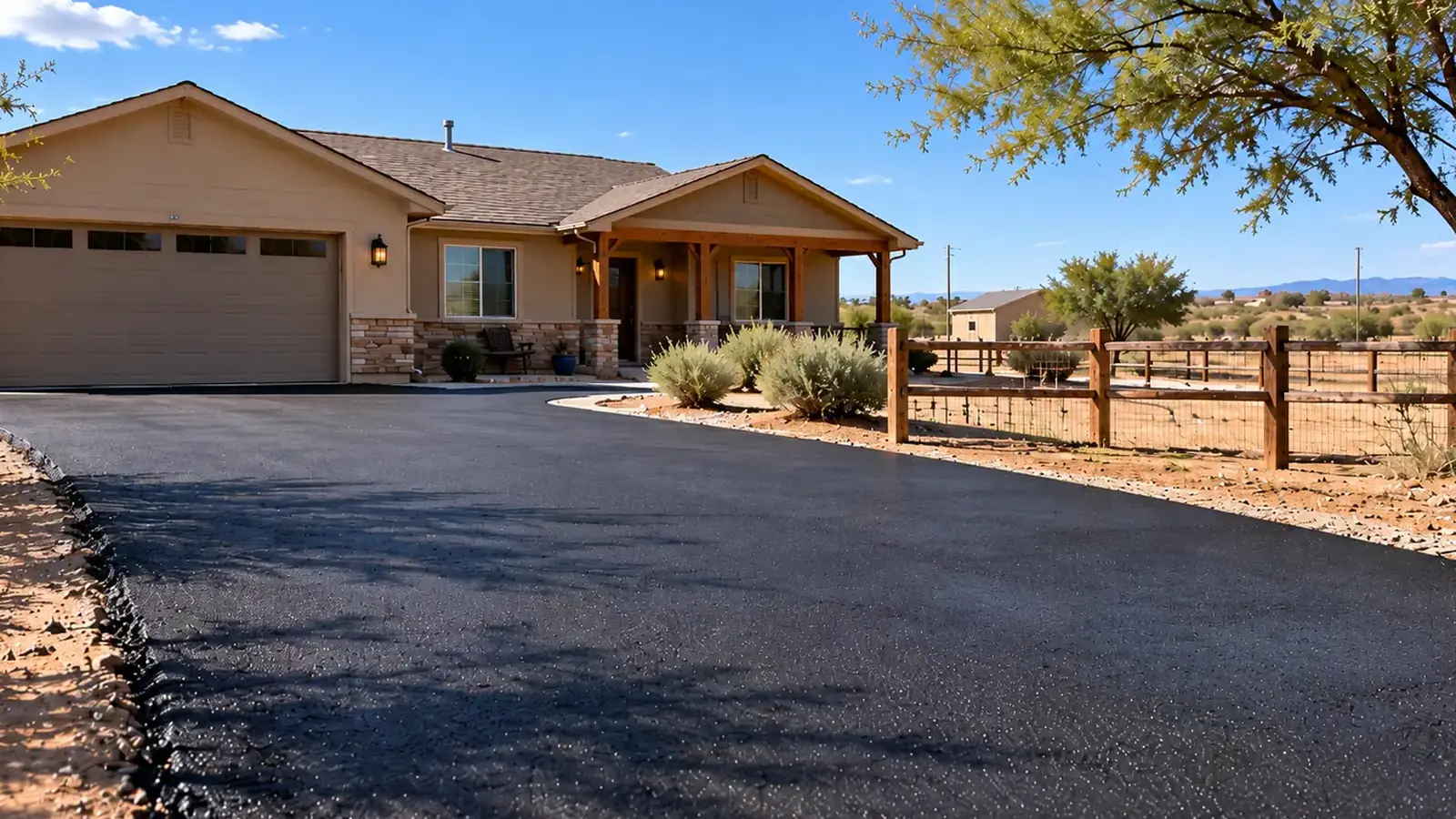
Building where the road is still dirt
Rio Rancho Estates is the big, open part of the city — lots of an acre or more, homes spread out, and many streets that are still unpaved. It's great for space and views. It's hard on driveways: every car that comes up a sandy road drags sand onto your driveway, the wind keeps moving it, and monsoon water doesn't always follow the road ditches.
What works out here
- Asphalt where you live. Pave the parking area, turnaround and garage approach — the spots you walk and park on every day.
- Chip seal or millings to the road. A firm, much less dusty surface for the long stretch, at a fraction of the cost of hot-mix. See chip seal and millings.
- A defined edge at the road. A clean transition where your driveway meets the dirt street keeps the end from breaking down.
- Drainage first. We look at how water crosses your lot during a storm and shape the driveway so it doesn't become the channel.
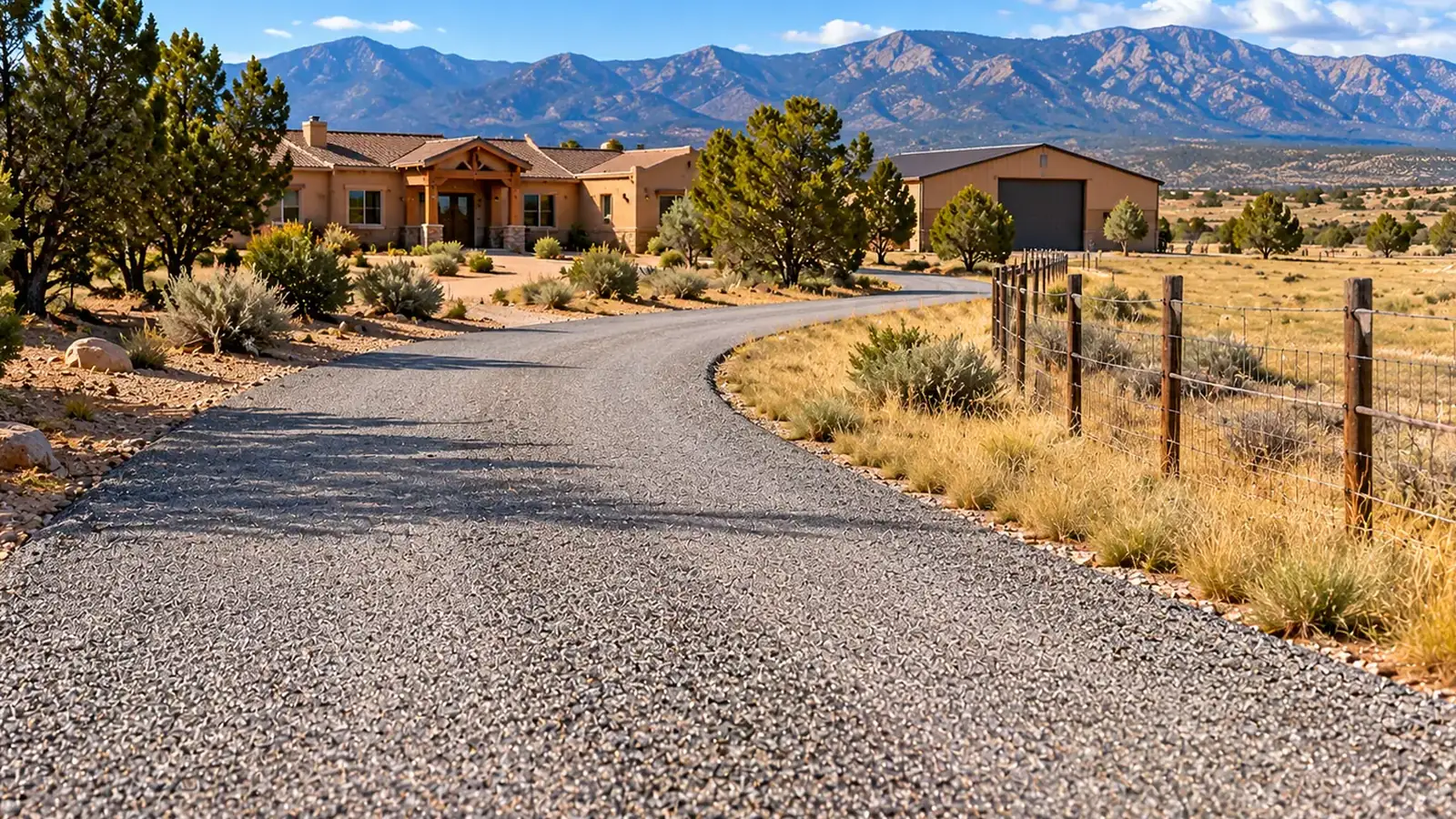
New homes
If you're building in the Estates, it's worth planning the driveway early — before landscaping goes in. We can rough-grade during construction and pave once the heavy trucks are done, so you aren't paving twice.
Shared access
Some lots share an access lane. We can price shared sections separately so neighbors can split them. See private road paving.
Our guide to driveways on dirt-road lots walks through the options and costs.
What we do in Rio Rancho Estates
- New asphalt driveways and dirt or gravel conversions
- RV pads and side-yard parking
- Overlays and resurfacing for worn asphalt
- Sealcoating and crack sealing
- Pothole and asphalt repair
- Private and HOA roads, chip seal and millings
- Parking lots and commercial paving
Common questions
Is it worth paving if my street is dirt?
Usually, yes — especially near the house. You'll cut dust and mud dramatically. Many owners use chip seal or millings closer to the road.
Can you pave the road in front of my house?
Public streets are the city's responsibility, so we don't pave them. We pave your driveway, parking area and any private shared lanes.
What's the cheapest dust-control option?
Compacted recycled millings over a graded base is usually the lowest-cost surface that makes a real difference.