Small cracks, big consequences
When a crack opens, two things get in: water and sand. Water soaks the base and, on cold nights, freezes and widens the crack. Wind-blown sand packs into the gap so it can't close back up in summer heat, and the edges start to break down. Left alone, a single crack turns into a web of cracks, then a pothole.
How we seal cracks
- Clean it out. Weeds, sand and loose material come out, and the crack is blown clean. Sealant won't bond to dust.
- Rout if needed. On some cracks we cut a clean channel so the sealant has a uniform space to grip.
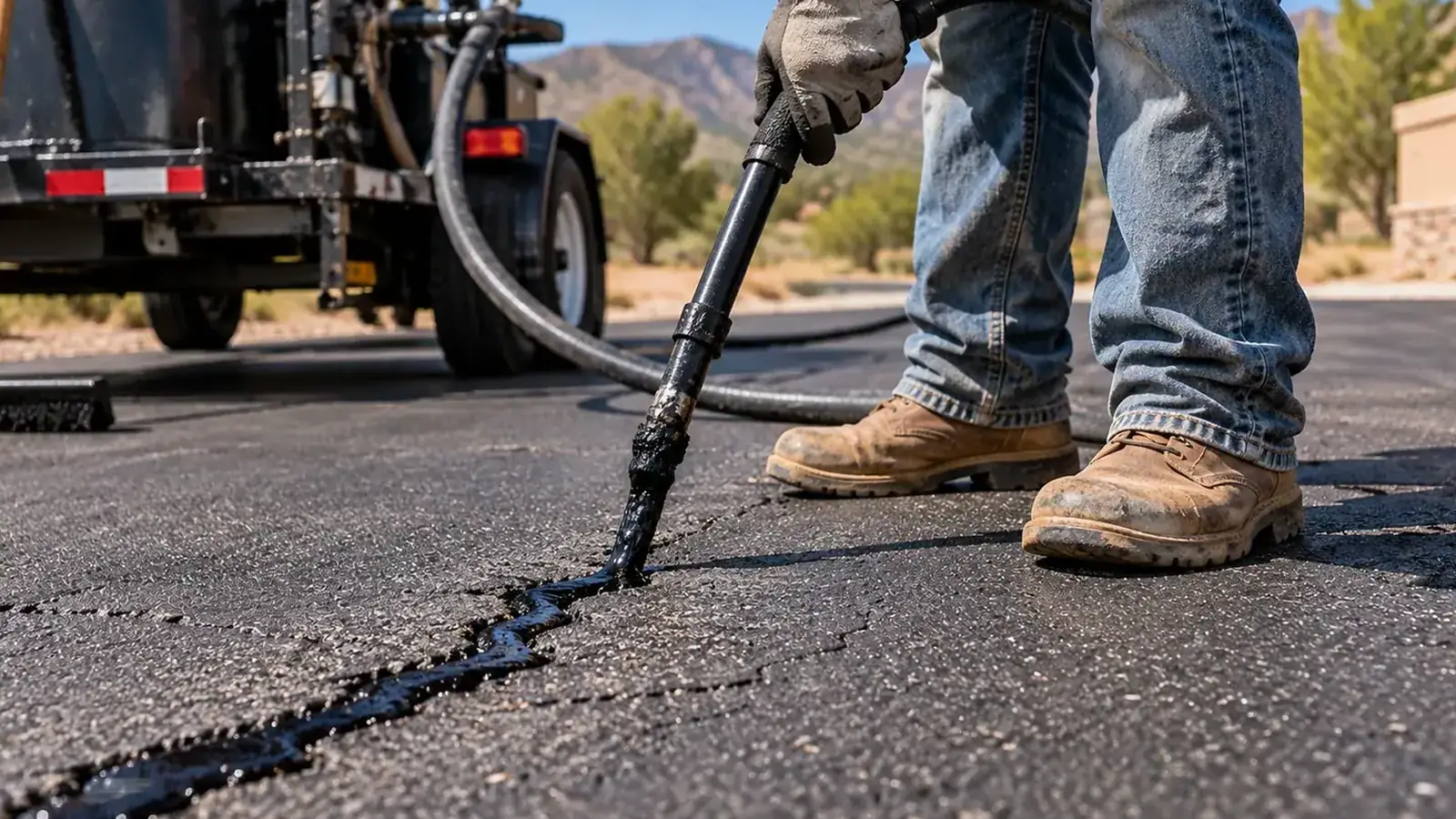
- Hot-pour sealant. Heated rubberized sealant that stays flexible through cold nights and hot afternoons.
- Finish. Squeegeed flush or banded slightly over the crack.
What it fixes and what it doesn't
Good for
Single cracks from about 1/4" to 1" wide — along edges, across the driveway, at joints and seams.
Not a fix for
Alligator cracking, potholes or sunken areas. Those mean the base underneath has failed and needs full-depth repair.
For HOAs and property managers
Crack sealing is the most cost-effective maintenance for shared roads and parking lots. We can walk your property, map the cracks, and price a yearly program so the budget stays predictable. See private and HOA roads.
Common questions
Crack sealing vs. crack filling?
Filling uses cheaper, less flexible material just to plug the gap. Sealing uses hot-applied rubberized sealant designed to flex with temperature swings and keep water out longer.
When is the best time?
Spring and fall, when cracks are mid-width — not fully closed by summer heat or stretched open by winter cold.
How long does it last?
Professionally applied hot-pour sealant commonly lasts several years. Check once a year and seal new cracks as they show up.