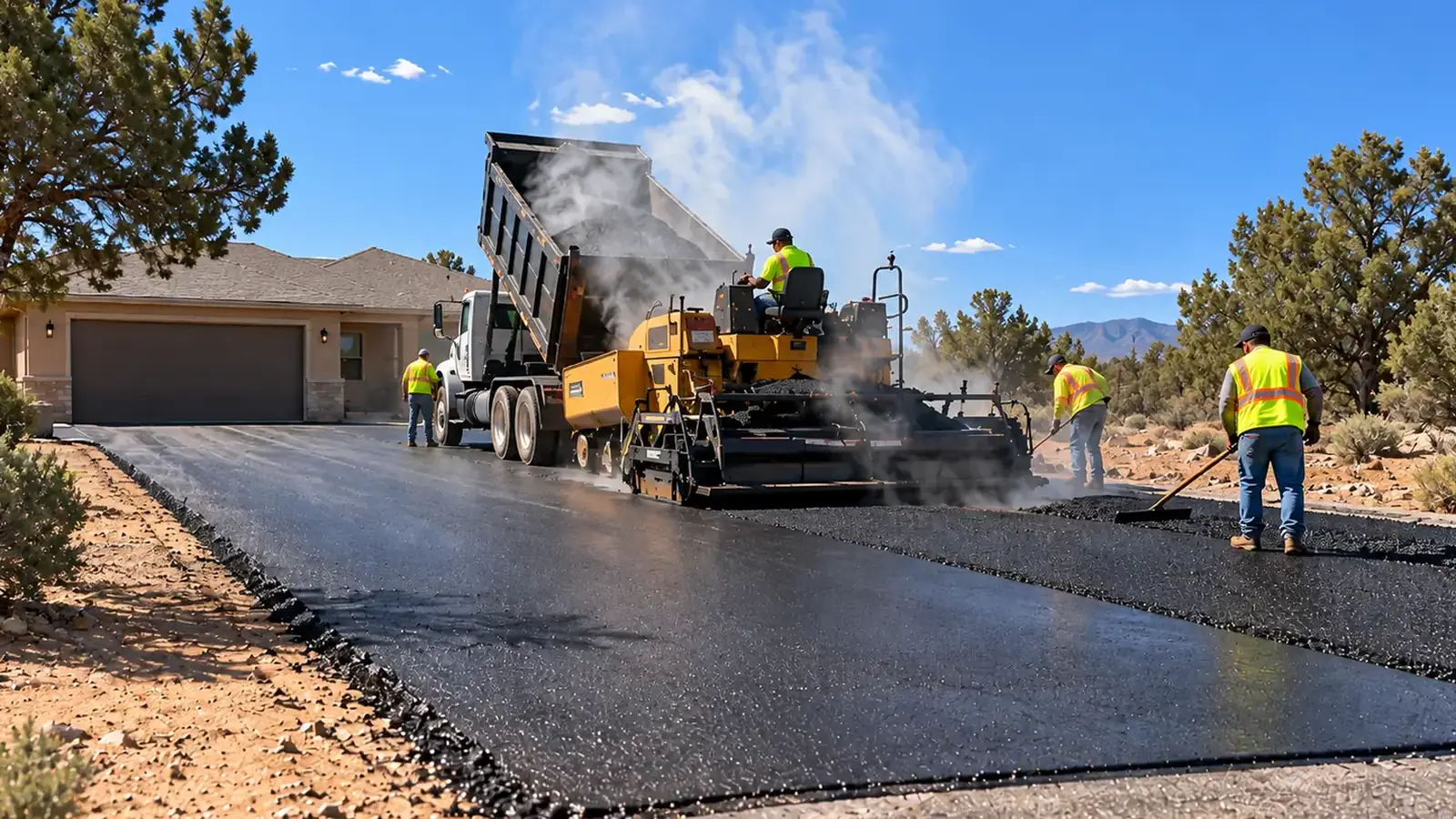
Why dirt and gravel drives wear people out here
On the mesa, a dirt driveway is really a sand driveway. It turns soft after rain, ruts under heavy tires, and every windy afternoon sends a little more of it across the yard and into the house. Gravel helps for a while, but on sand it slowly sinks and spreads, and the ruts come back.
Asphalt stops the dust, sheds water, and gives you a firm, clean surface you don't have to rake, top off or regrade.
How a conversion works
- Probe what you have. We check how much gravel is there, how clean it is, and how firm the sand underneath feels.
- Reuse what's good. Clean, firm gravel gets bladed, shaped and compacted as part of the new base. That can lower the cost compared with starting from raw dirt.
- Fix the weak spots. Ruts, soft sand and pockets of organic material are dug out and rebuilt.
- Add base and compact. New aggregate base fills in where the old gravel is thin or dirty, then the whole thing is watered and rolled.
- Pave. Hot-mix asphalt goes down and gets rolled, with clean edges and smooth tie-ins at the street and garage.
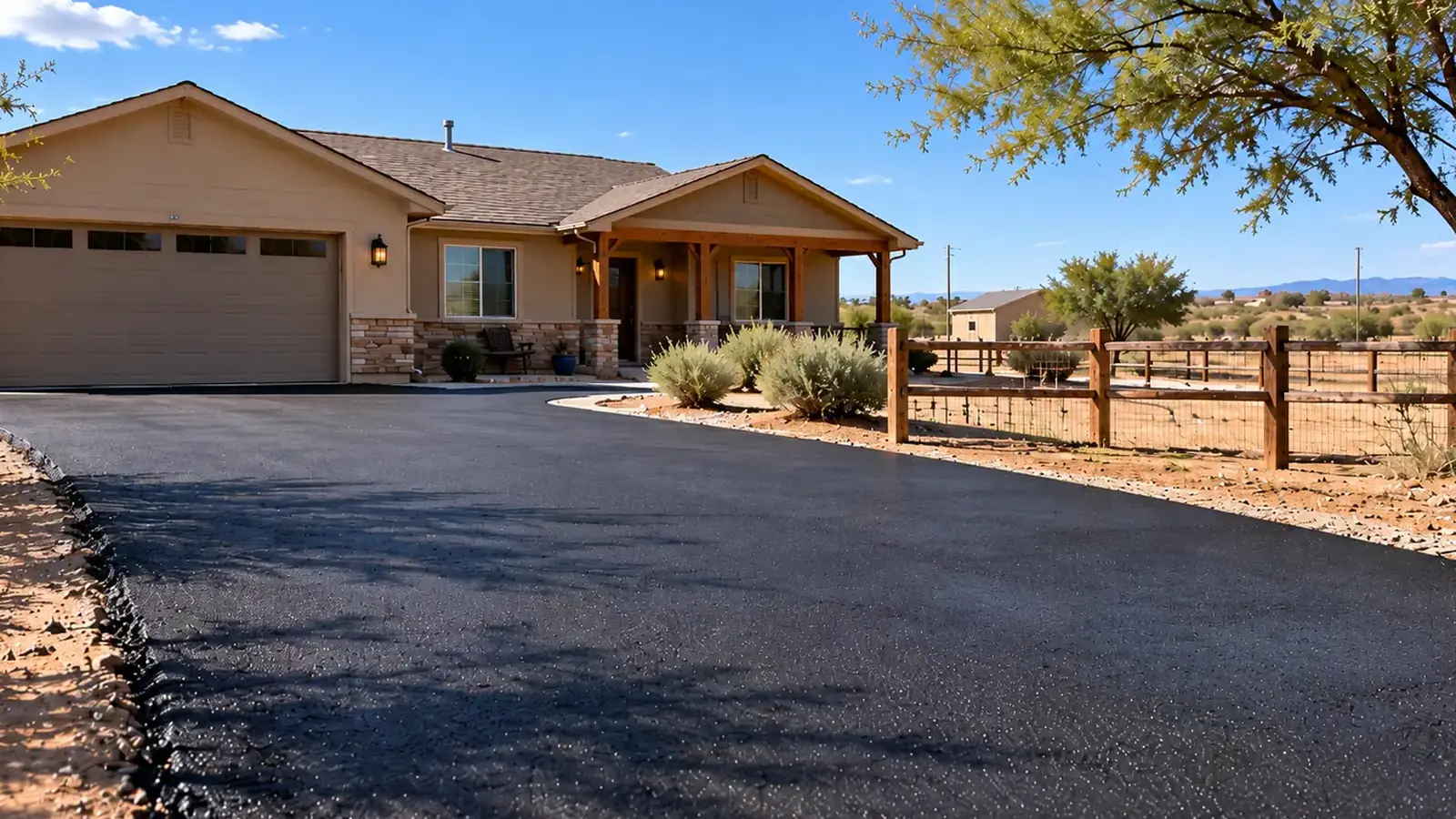
Long drives on big lots
On acreage in Rio Rancho Estates, Corrales or Placitas, a driveway can run a long way back from the road. Paving every foot isn't the only option. Common combinations:
- Asphalt at the house — the parking area, turnaround and the stretch you see every day.
- A paved apron at the road — keeps sand and gravel off the street and gives you a clean entrance.
- Chip seal or recycled millings for the rest — firm and much less dusty, at a lower cost per foot.
Our guide to driveway options on dirt-road lots covers this in more detail.
Common questions
Can you just put asphalt on top of my gravel?
Not as-is. Loose gravel on sand moves under the pavement and the asphalt cracks with it. It has to be regraded, topped up where thin, and compacted into a real base first.
Is a conversion cheaper than a brand-new driveway?
Often, yes. If the existing gravel is clean and firm, it becomes part of the base, which saves material and excavation.
My lot is on a dirt road. Is it still worth paving the driveway?
Usually — you'll still get a clean, dust-free surface at the house. Many owners pave near the house and use millings or chip seal toward the road, since the road itself will keep bringing sand in.