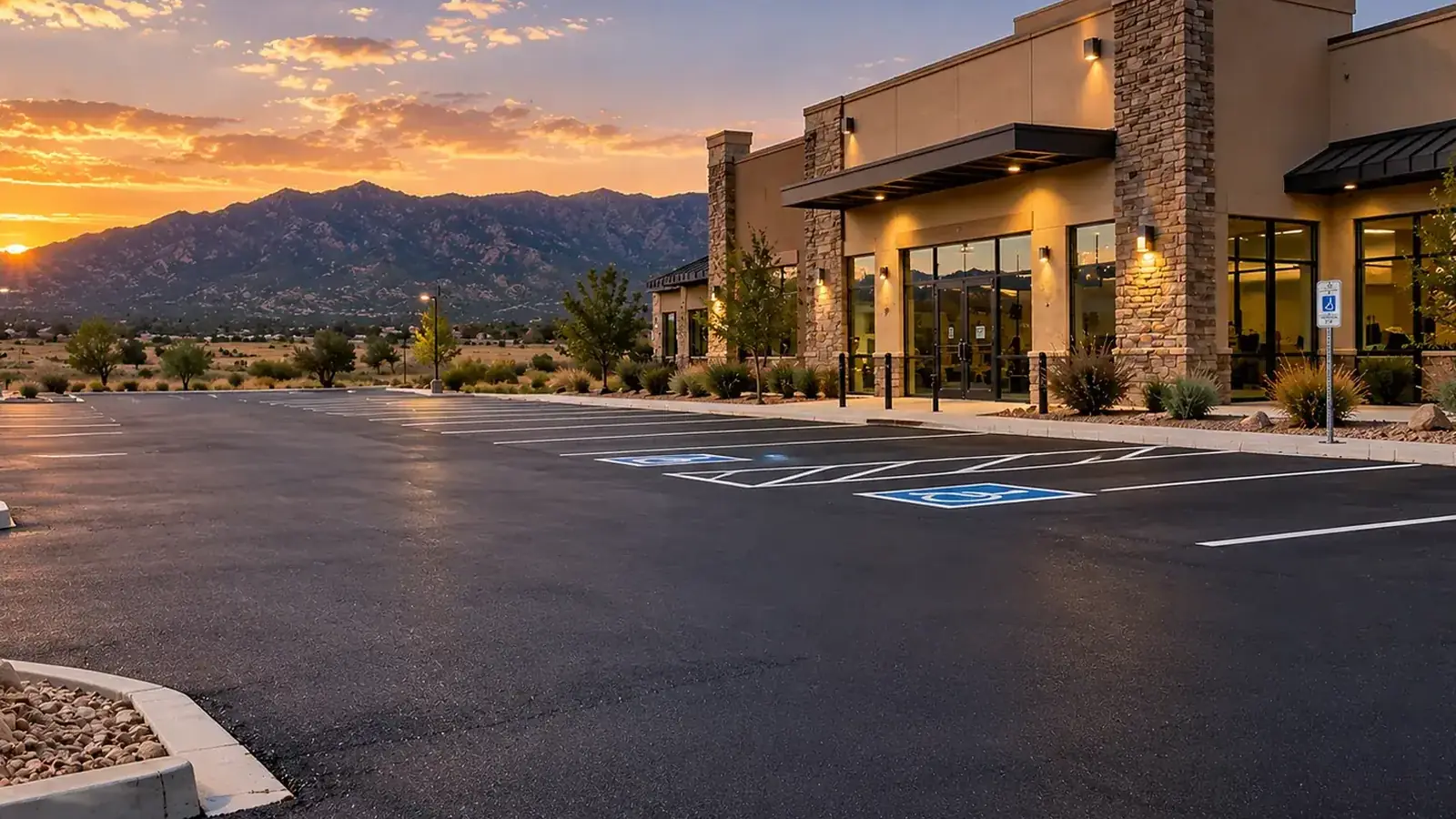
First impressions start in the parking lot
Customers notice potholes, faded stripes and standing water before they notice your sign. Along busy corridors like NM-528, Southern Boulevard and Unser, lots also take daily abuse from delivery trucks and trash trucks — which is why entrances and dumpster pads are usually the first places to fail.
What we do
- New construction — grading, drainage, base and asphalt sized for the traffic you'll actually get
- Mill and overlay — new surface on lots with a sound base
- Full-depth repair — rebuilding failed entrances, drive lanes and dumpster pads
- Crack sealing and sealcoating — the best-value maintenance there is
- Striping — stalls, arrows, crosswalks, fire lanes and accessible spaces
- Drainage fixes — regrading low spots that pond after storms
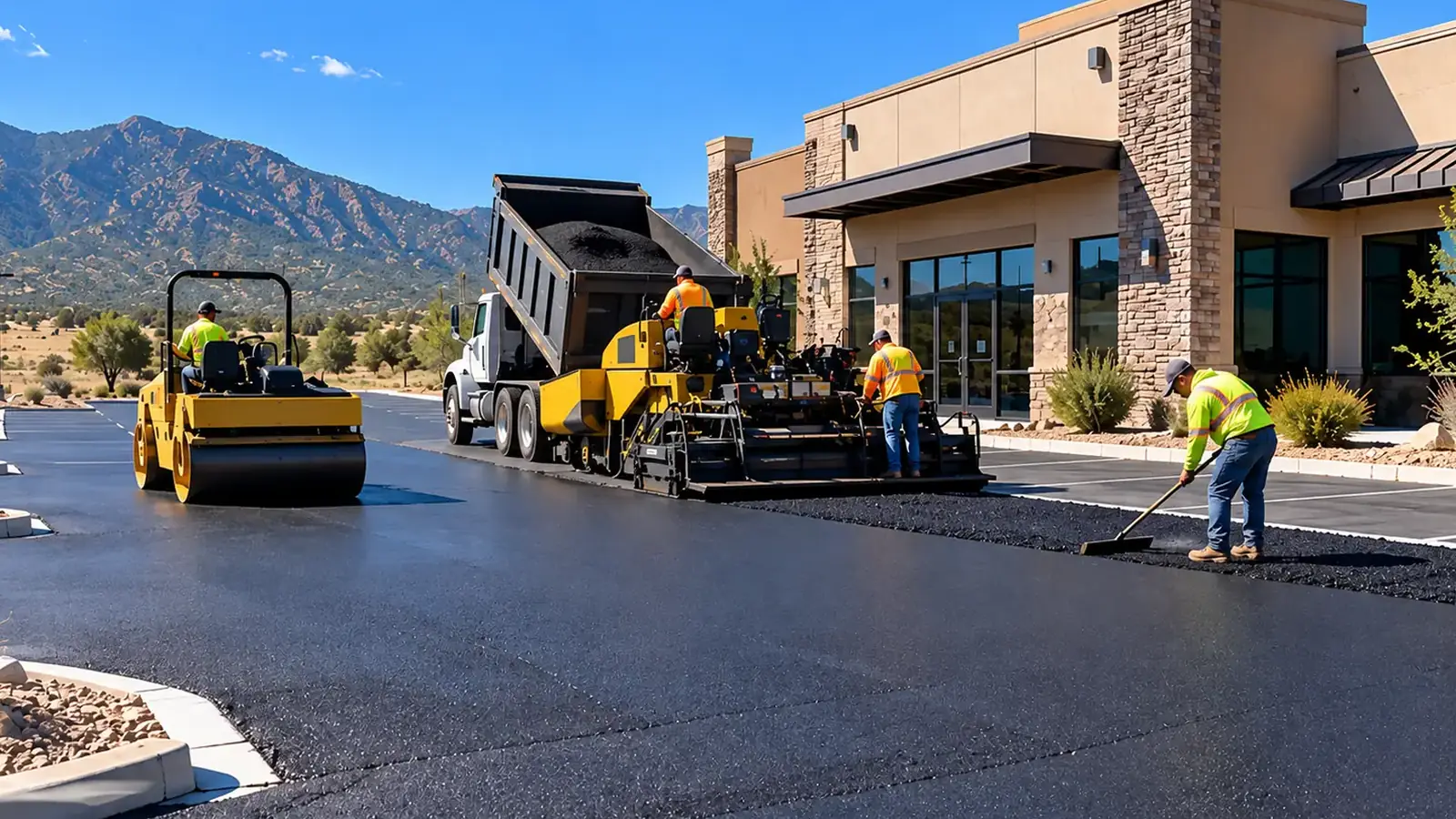
Staying open while we work
We split most lots into phases so part of it is always usable, and we can schedule evenings and weekends. You'll know the schedule ahead of time so you can let customers, tenants or a congregation know.
Heavier where it counts
Instead of over-building the whole lot, we put a heavier section where trucks enter, turn and stop — and a standard section in car stalls. It's the most efficient way to stop the early failures that always show up in truck lanes first.
See also commercial paving and parking lot paving in Rio Rancho.
Common questions
Can you pave without shutting us down?
Yes — we phase the work so part of the lot stays open, or schedule nights and weekends.
Do you restripe?
Yes, on its own or after sealcoating or resurfacing, including accessible parking spaces and fire lanes.
How often should a lot be sealcoated?
Most commercial lots benefit from crack sealing and sealcoating every 2–3 years, with restriping at the same time.