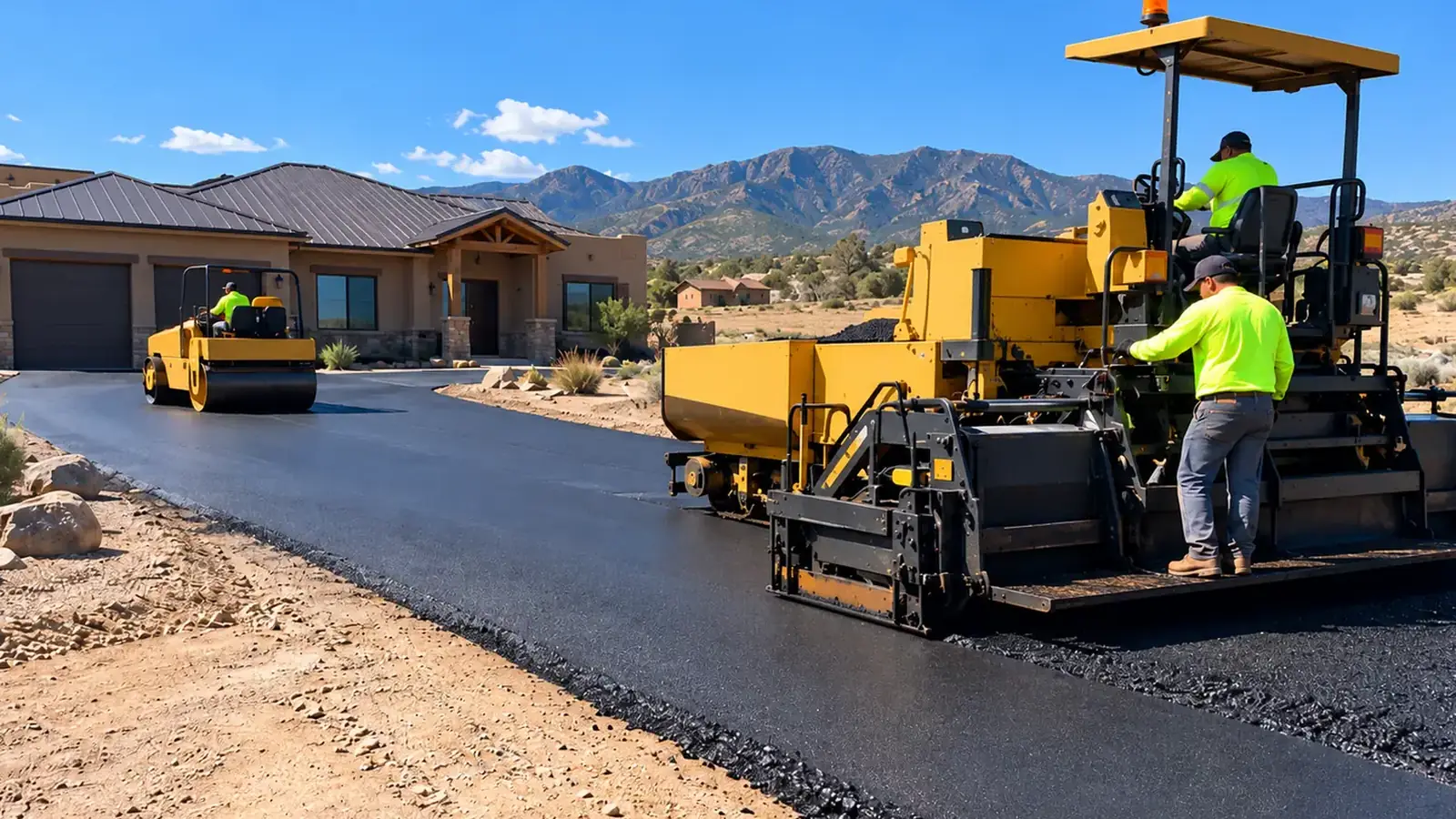
Sand is easy to dig and hard to build on
Most of Rio Rancho sits on the mesa west of the Rio Grande, and most of that ground is sand — fine, wind-blown sand in some neighborhoods, coarser sand and gravel in others, with hard caliche layers turning up a foot or two down on some lots. Sand drains well, which is good. But loose sand also shifts under wheel loads and washes out fast when a summer storm sends water across it.
A driveway laid on sand that was only scraped and rolled once tends to fail in the same ways: edges that break off where tires run near them, low spots where the sand underneath settled, and washouts along the side where runoff undercut the asphalt. All three are base problems, not asphalt problems.
What goes into one of our driveways
- Measure and walk the site. We mark out the shape, check where water comes from and where it leaves the lot, and look at how you'll actually use it — daily cars, a work truck, a trailer, an RV.
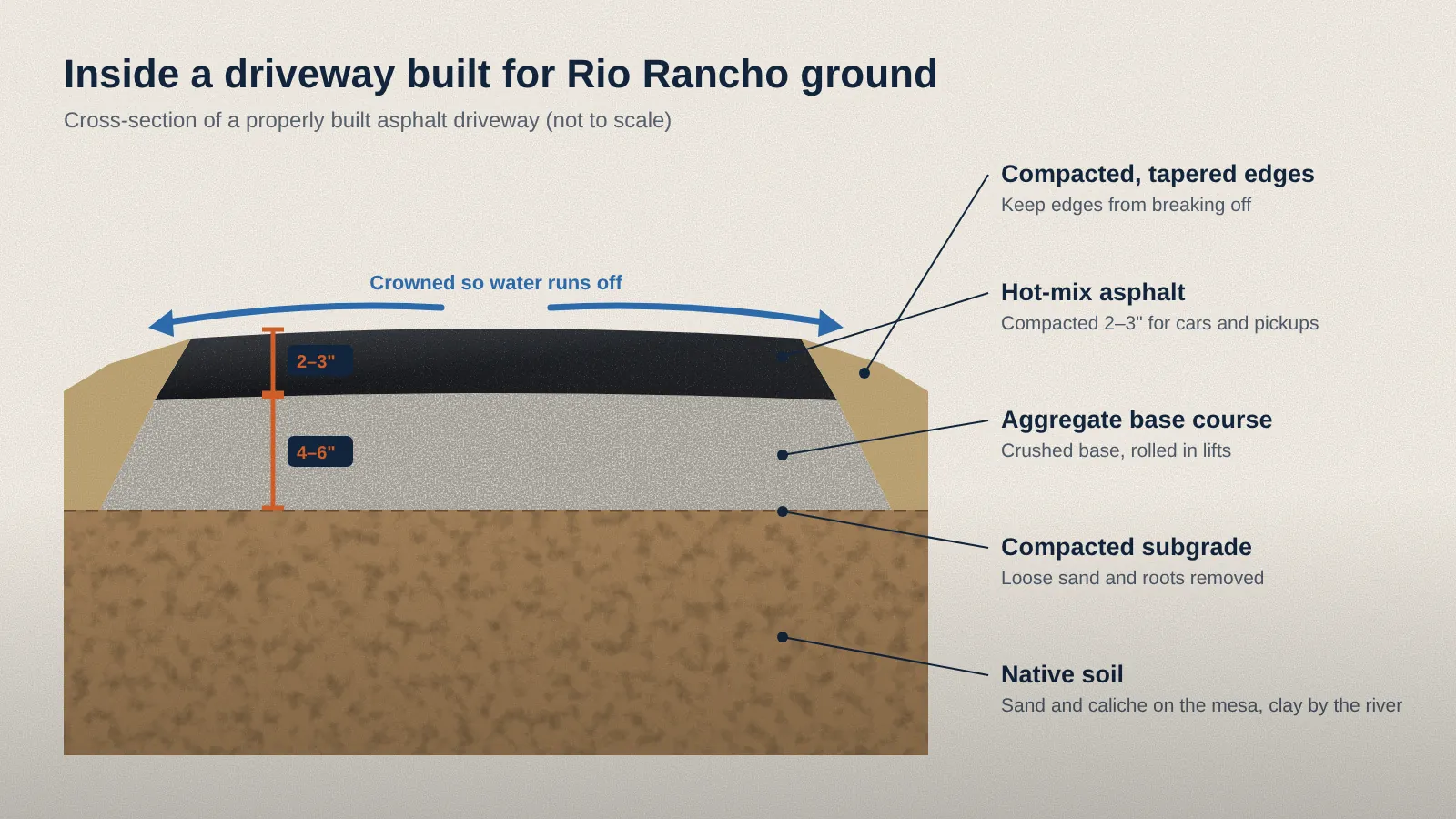
- Dig out and stabilize. Loose surface sand, roots and debris come out. Where the sand is especially soft, we dig deeper and replace it so the driveway has an even foundation.
- Shape for water. The subgrade gets a slope or crown so storm water leaves the surface and heads somewhere safe — not into the garage and not along the driveway edge.
- Compacted base course. Crushed aggregate base, watered and rolled in lifts. Typical residential depth is 4–6 inches; more where heavy vehicles will park.
- Hot-mix asphalt. Placed and rolled to a compacted 2–3 inches for most homes, heavier where trucks and trailers come and go.
- Edges and tie-ins. Edges are rolled down at an angle and backed with compacted material so they don't snap off. Transitions to the street, garage slab and walkways are made smooth.
Built with Rio Rancho's weather in mind
Wind and sand
Spring winds pile sand against edges and scour unprotected shoulders. A backfilled, compacted shoulder keeps the edge supported.
Monsoon storms
Short, heavy downpours move a lot of water across sandy lots. Grade and outlets matter more than thickness.
Winter nights
Freezing nights and sunny afternoons mean water in cracks freezes and expands. Keeping water out of the base keeps the driveway together.
Strong sun
At over 5,000 feet, UV dries asphalt binder quickly. Plan on sealcoating once the new surface has cured.
Asphalt or concrete?
Many Rio Rancho subdivisions were built with concrete driveways, and plenty of owners are happy with them. Asphalt usually costs less per square foot, is quicker to install, handles a little ground movement without cracking into slabs, and is easy to patch or extend later. It's the more common choice for long drives, larger lots and properties where concrete would get expensive fast. Our asphalt vs. concrete guide lays out the trade-offs.
Want a ballpark first? Text a couple of photos and the rough length and width to (505) 207-4231. Typical price ranges are in our Rio Rancho cost guide.
Common questions
How thick will my driveway be?
Most Rio Rancho homes get 4–6 inches of compacted aggregate base and 2–3 inches of compacted hot-mix. If you park an RV, trailer or work truck on it, we add depth to both.
How long does an asphalt driveway last here?
Built on a solid, well-drained base and sealcoated every few years, an asphalt driveway commonly lasts 20 years or more.
How soon can I park on it?
Usually two to three days for cars. In hot weather, avoid turning the steering wheel while parked, and keep trailer jacks and kickstands off it for the first few weeks.
Do I need a permit?
Paving on your own property usually doesn't. Work in the street right-of-way — a new curb cut or driveway apron — may need a permit from the City of Rio Rancho or the county. We'll tell you at the quote if it applies.