When an overlay makes sense
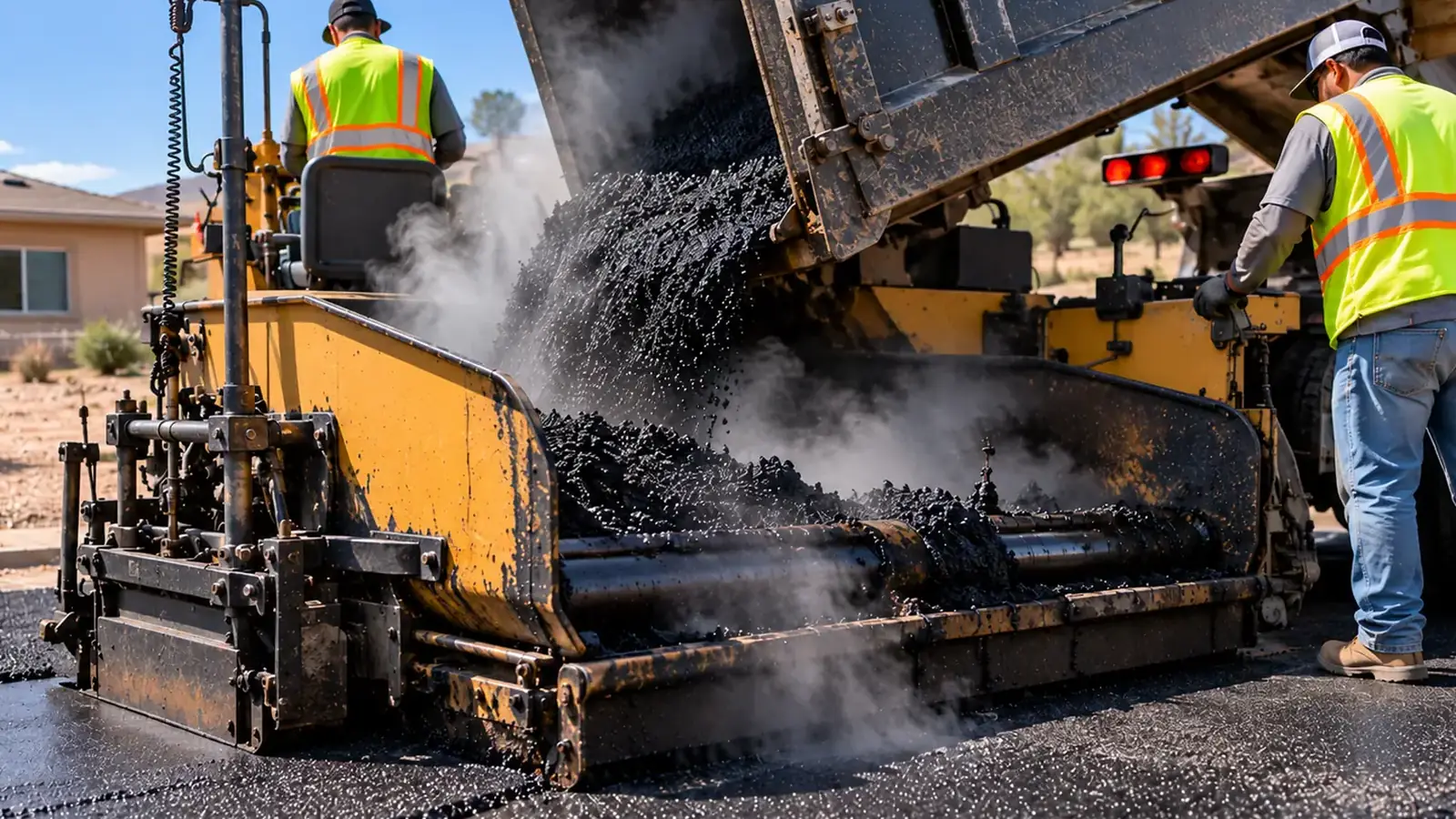
An overlay is a new layer of hot-mix asphalt placed over your existing pavement. It's a good fit when the problems are on the surface and the base underneath is still doing its job. It's a bad fit when the base has failed — because then the old cracks come straight up through the new layer.
| Signs it's a good candidate | Signs it needs repair or replacement first |
|---|---|
| Faded, gray, rough or raveling surface | Spiderweb (alligator) cracking across large areas |
| Scattered narrow cracks | Sunken spots, ruts or edges sliding off |
| A few small potholes | Pavement that flexes when you drive on it |
| Water drains off normally | Water ponds or runs under the asphalt |
How we do it
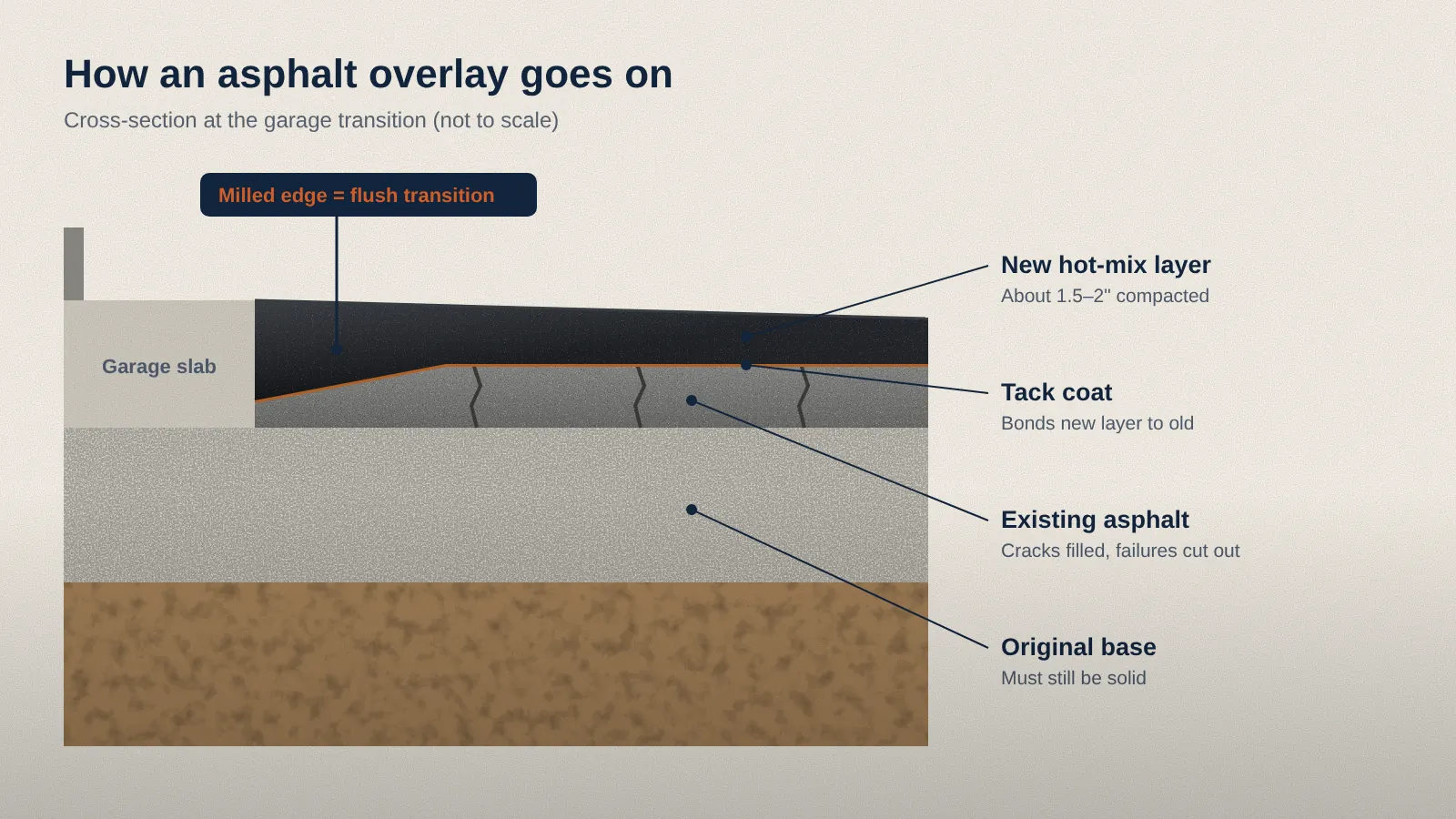
- Fix failed areas first. Any section with alligator cracking or soft base is cut out and rebuilt full-depth.
- Seal larger cracks. So they're less likely to show back through.
- Mill the edges. We grind the old asphalt down at the garage, walks and street so the new layer finishes flush — no bump at the garage door.
- Clean and tack. The surface is swept and a tack coat is sprayed so the new layer bonds.
- Pave. Typically about 1.5–2 inches compacted on driveways, more on lots with heavier traffic.
Why owners choose it
- Considerably less expensive than full removal and replacement
- Most driveways are done in a day
- Less demolition, less hauling
- Can smooth out minor dips and improve drainage slightly
Not sure which you have? Text a few photos to (505) 207-4231 and we'll tell you honestly whether an overlay will hold.
Common questions
How long does an overlay last?
On a sound base, commonly 10–15 years or more, especially with sealcoating every few years.
Will it raise my driveway at the garage?
Not if it's milled first. We grind down the old asphalt at the garage, walks and street so the new layer meets them flush.
Can you overlay alligator cracking?
Only after those sections are removed and rebuilt. Alligator cracking means the base has failed, and it will crack through new asphalt.