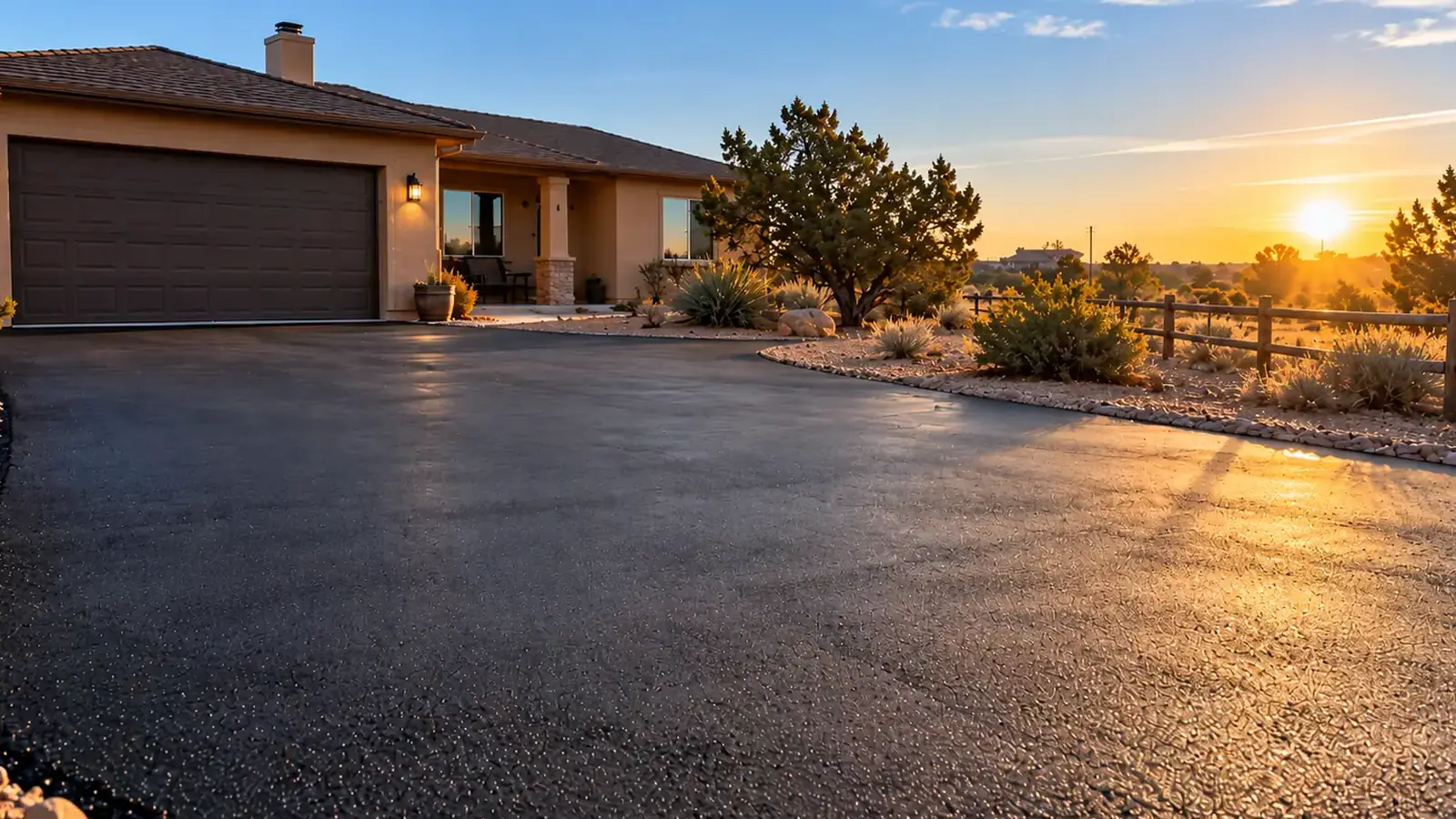
Long drives, horse properties and private lanes
Many Corrales homes sit well back from Corrales Road or a side lane, with long drives, barns, arenas and trailer parking. Dirt and gravel are traditional here, and they're also the source of most of the dust, ruts and mud owners call us about.
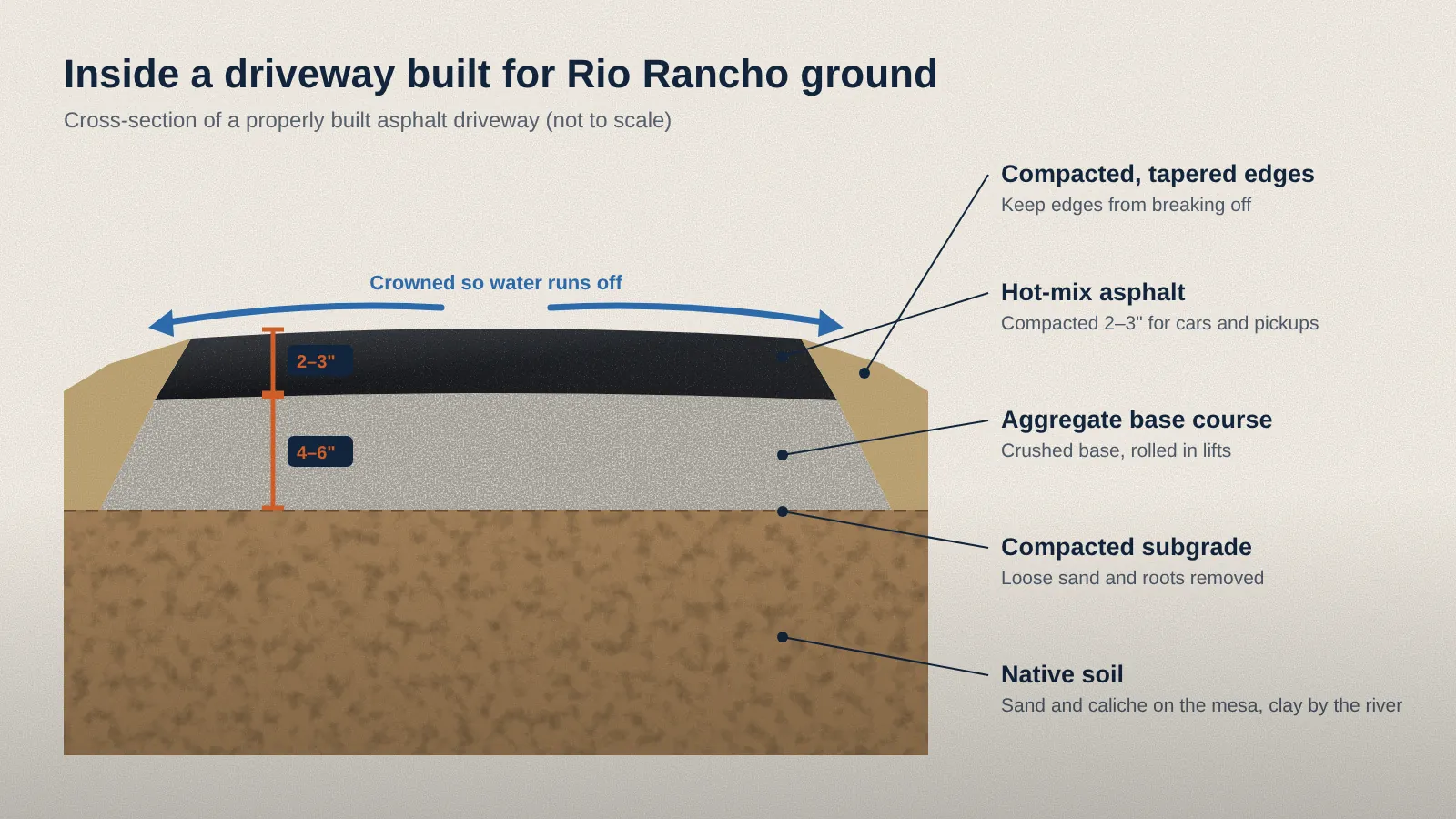
A Corrales driveway, built in layers
- Look at the whole property. Where you park, where trailers turn, where water flows, where the ditches and easements are.
- Shape and drain. A crown or slope so water leaves the surface, with outlets that don't send runoff into a ditch or onto a neighbor.
- Compacted base. Sandy soil on the west side and siltier soil near the river each get the base depth they need.
- The right surface in the right place. Asphalt at the house, chip seal on the long drive, compacted millings at the barn and trailer parking.
Trees and roots
Big cottonwoods and old orchard trees are part of Corrales. We remove roots in the driveway footprint and keep the pavement edge back from large trunks where we can, so roots don't lift the surface later.
Shared lanes
Private lanes serving several homes are common. We price the lane separately and break it down so neighbors can split it. See private roads.
Common questions
Does Corrales allow asphalt driveways?
Asphalt on private property is common in Corrales. Work affecting village roads, ditches or easements may have requirements; we'll check at the quote.
What's best for a horse property?
Usually asphalt or chip seal on the main drive and compacted millings in barn and trailer areas, where hooves and steel shoes are less of an issue on a firm surface.
Can you keep the rural look?
Yes — chip seal's stone texture fits well, and edges can be finished with gravel or native landscaping.